Palm Fronds Turning Brown From the Bottom Up? Normal or a Problem?
Quick Answer: Lower palm fronds turning brown one or two at a time is usually normal. Palms shed their oldest leaves as new ones open from the center, and a naturally aging frond turns tan or bronze and dies fairly quickly. It becomes a problem when many fronds brown at once, when browning creeps up into the middle of the canopy, when fronds die on only one side of the leaf, or when the newest spear leaf in the center looks weak or discolored. Those patterns point to nutrient deficiency, drought or irrigation trouble, or a disease such as Fusarium wilt.
You are standing on the back patio looking up at the palm that has anchored the corner of your yard for years. The bottom ring of fronds has gone brown and droopy, hanging down against the trunk like a skirt. A couple of the fronds just above them are yellowing at the tips. The top still looks green and full. Is this the palm doing what palms do, or the start of something you should worry about?
Most of the time, a few brown fronds at the bottom are part of a palm's normal cycle. But the same symptom can also be the earliest sign of a nutrient shortage or a disease that has no cure. The difference is in the details: how many fronds, how fast, which part of each leaf, and what the center of the crown looks like.
How a Healthy Palm Ages Its Fronds
Palms grow differently from most trees in your yard. They have a single growing point, called the bud, tucked deep in the center of the crown. Every new frond starts there, emerges as a tight spear, and opens over time. As each new frond opens at the top, the oldest frond at the bottom of the crown eventually declines, turns brown, and either drops or hangs against the trunk.
So a palm that produces new leaves is always retiring old ones. A healthy palm in the Sacramento Valley might lose several lower fronds over the course of a year. The browning starts at the frond tips and edges, spreads across the leaf, and the whole frond goes tan or bronze in a relatively short span. Above it, the canopy stays a consistent green, and the spear in the center keeps pushing up straight.
That is the pattern to compare against. If what you see matches it, the palm is most likely fine.
When Bottom Browning Points to a Nutrient Problem
University of California pest management guidance lists potassium, magnesium, and nitrogen as the most common nutrient deficiencies in yard palms, and premature yellowing of lower fronds is one of the classic early symptoms. Palms short on certain nutrients pull them out of the oldest leaves to feed new growth, so the bottom of the canopy shows the shortage first.
Potassium Deficiency
The fronds develop yellow to orange spotting or translucent flecks, and the leaflet tips turn brown and frizzled. The frond may stay partly green in the center while the edges die. University of Florida extension notes that a frond dying from deficiency declines slowly, while one dying from normal aging turns bronze and goes quickly.
Magnesium Deficiency
Older fronds show a broad yellow band along the edges while the center of the leaf stays green, which gives them a two toned look.
Nitrogen Deficiency
The whole canopy, starting from the bottom, looks pale and lighter green than it should, and growth slows.
A deficiency does not always mean the soil lacks the nutrient. Compacted soil, poor drainage, cold wet roots in winter, or an excess of one nutrient from lawn fertilizer can block uptake of another. A soil or leaf test from a commercial lab is the reliable way to confirm what is going on before you apply anything.
Tip: Lawn fertilizers that are high in nitrogen can make potassium and magnesium problems in palms worse. If your palm sits in or next to turf, a fertilizer formulated specifically for palms, applied across the root zone rather than piled against the trunk, gives it a better balance.
Heat, Drought, and Irrigation in the Valley
Sacramento summers bring weeks of temperatures in the high 90s and above, with little or no rain from late spring into fall. Many palms planted around Sacramento, Elk Grove, Roseville, and Rancho Cordova handle heat well, but they still need consistent deep moisture through the root zone. A palm that gets only light, frequent sprinkler water, or one whose irrigation changed when the lawn around it was removed, can show stress in the lower canopy first.
Drought stress usually looks like widespread tip burn and faster browning of the lower and middle fronds during the hottest months, rather than the spotted or banded patterns of a nutrient shortage. The opposite problem shows up too. Palms sitting in heavy clay that stays soggy can suffer root problems, and the symptoms climb up the canopy as the roots fail.
The Patterns That Signal Something Serious
Some browning patterns should move a palm to the top of your list for a professional inspection.
Browning On One Side Of Each Frond
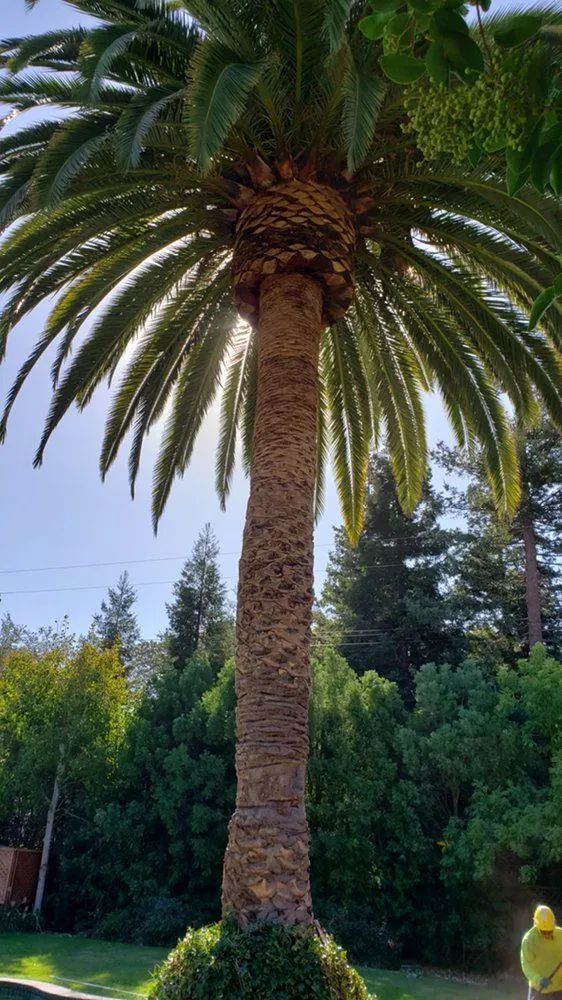
Leaflets are dying along just one side of the frond's central stem, while the other side stays green, and you see a dark brown streak running along the stalk on that same side, that matches the description of Fusarium wilt. University of Florida research on Canary Island date palms describes exactly this one-sided pattern, starting with the oldest fronds and moving up the canopy. Canary Island date palms are widely planted across older Sacramento neighborhoods, so this disease is worth knowing.
Browning Racing Upward
Several rings of fronds dying within one season, rather than one or two at a time, means the palm is losing leaves faster than it is making them.
A Weak Or Discolored Spear
The newest spear leaf at the center should be firm and green. A spear that is brown, wilted, or pulls out easily with a gentle tug can mean the bud is rotting, and a palm cannot replace its only growing point.
A Foul Odor Or Wet Rot Near The Crown
Bud rots often come with a sour smell and soft tissue at the top of the trunk.
Warning: Fusarium wilt has no cure, and fungicides have not been effective against it. The fungus spreads mainly on contaminated pruning tools, and an infected palm can pass it along before it shows symptoms. Never let anyone trim your palm with saws or blades that just came from another palm without disinfecting them first.
If wilt is suspected, a lab test on a frond showing the one sided pattern is the way to confirm it. A dead brown frond is not a useful sample. Infected palms should be removed, and the wood should not be chipped for mulch. University of Florida guidance also advises against replanting a Canary Island date palm in the same spot, because the fungus can persist in the soil and root mass for years.
Why Cutting Off Every Brown Frond Can Backfire
When the lower fronds brown, the instinct is to cut them all off along with a few of the yellowing ones above. That tidy, tall pineapple look is common in many neighborhoods, but it often hurts the palm.
Yellowing Fronds Are Still Feeding The Palm
Yellowing fronds with green centers still supply nutrients. Removing them can worsen potassium deficiency, causing the next ring of fronds to yellow faster.
Older Fronds Protect The Crown
Outer fronds help absorb strong winds and protect the crown. Removing them unnecessarily exposes newer fronds and the growing bud.
Each Cut Is An Entry Point
Fresh cuts create entry points for pests and disease organisms. Unsanitized pruning tools can also spread infections from one palm to another.
A common guideline from extension horticulturists is to remove only fronds that are completely brown. If more trimming is needed, imagine the crown as a clock face and leave everything above the line running from nine o'clock to three o'clock. Anything that hangs below horizontal can come off. Fronds above that line should stay.
Tip: Ask whoever trims your palm how they clean their tools between trees. A clear answer, such as soaking blades in a disinfectant solution or using a fresh blade for each palm, is a good sign they understand palm disease.
Tall Palms and Safety
On a short palm, you can look closely at fronds yourself. On a tall Mexican fan palm or a mature Canary Island date palm, the important evidence is often twenty to sixty feet up. Dead fronds on tall palms can also become a hazard on their own. They can fall in wind, dropping heavy, sharp debris on patios, cars, or people. Dry hanging fronds also hold fuel close to structures, which matters across the valley during fire season.
Climbing palms with spikes wounds the trunk and creates permanent entry points for disease, so a careful arborist will use other methods such as a lift or proper climbing techniques when inspecting and trimming tall palms.
A Simple Check You Can Do This Week
Count The Brown Fronds
One or two brown fronds at the bottom are normal. Several rings of brown fronds signal a potential problem.
Examine One Frond Closely
Check whether browning affects the tips, edges, appears as spots, or occurs along only one side.
Check The Center
The spear should remain green, straight, and firm. Changes in its condition may indicate stress or disease.
Review Your Watering
Consider recent irrigation changes and check whether the soil around the palm's base remains consistently soggy.
Think About Recent Trimming
Consider whether the palm was heavily trimmed within the past two years and whether proper techniques were used.
Frequently Asked Questions
Is it normal for the bottom fronds of my palm to turn brown?
Yes, in small numbers. Palms continuously retire their oldest fronds as new ones grow from the center. One or two lower fronds browning and drooping at a time is part of that normal cycle.
Should I cut off fronds that are only partly brown?
It is usually better to leave them. A frond with green tissue is still feeding the palm and protecting the crown. Remove fronds once they are completely brown, and avoid cutting anything above the horizontal line.
How do I know if my palm has Fusarium wilt?
The telltale sign is leaflets dying along one side of the frond, often with a brown streak running along the stalk on that side, starting with older fronds and moving upward. Only a lab test can confirm it, so have a professional collect a proper sample.
Can a nutrient deficiency in a palm be reversed?
Existing damaged fronds will not turn green again, but new fronds can grow in healthy once the deficiency is corrected. Expect improvement over a year or more, because palms grow slowly and only from the center.
Do palms in the Sacramento area need special fertilizer?
Many benefit from a fertilizer formulated for palms, which supplies potassium, magnesium, and micronutrients in a balance that general lawn products do not. A soil or leaf test tells you what your palm actually needs.
When should a palm be removed instead of treated?
Removal is usually recommended when the bud has died, when Fusarium wilt is confirmed, or when the trunk is structurally compromised. A palm cannot regrow from a dead bud, and an infected palm puts other palms at risk.
Reading Brown Fronds Before the Palm Declines
Brown fronds at the bottom of a palm are often just the tree aging the way it is designed to. Still, the same symptom can be the first quiet sign of a nutrient shortage, a watering problem, or a disease that spreads from palm to palm. Paying attention to how fast the browning moves, whether it hits one side of the leaf, and how the center spear looks is what separates a routine shedding cycle from a palm in trouble.
LD Tree Care
has spent 15
years working on palms across Sacramento, CA, and surrounding areas, trimming with clean tools and leaving healthy fronds where they belong. That experience shows that most palms recover or stay stable when the cause is caught early and pruning is kept restrained. A palm cannot regrow from a damaged bud, so patience with the knife and a close look at the crown protect both the tree and any palms growing nearby.