What to Expect During a Professional Tree Removal Service?
Quick Answer: A professional tree removal follows a clear sequence: an assessment and plan, site prep and safety setup, the controlled takedown (often in pieces, or felled whole when there's room), then stump handling and a full cleanup. A crew uses rigging, ropes, and the right equipment to bring the tree down safely in sections, especially near homes, fences, and lines. Most residential removals are done in a day, and a good crew leaves the site clean. Knowing the steps takes the worry out of the day.
Deciding to have a tree removed is one thing; picturing how a crew is actually going to take down something that large, safely, near your house, is another. It is natural to feel a little uneasy about removal day, wondering how the tree comes down, whether your yard and home are protected, and what is left behind when it is over. Most of that worry comes from not knowing the process.
The reassuring reality is that professional tree removal follows a well-established, methodical sequence, and a trained crew does it routinely and safely. Knowing what each step involves, from the first assessment to the final cleanup, turns removal day from an unknown into a predictable, organized job. Around Sacramento, where mature oaks and other large trees grow close to homes, that careful, planned approach matters. Here is what to expect, start to finish.
It Starts With an Assessment and a Plan
A removal does not begin with a chainsaw; it begins with an arborist looking carefully at the tree and the site.
Before any cutting, a professional assesses the tree and everything around it: the tree's size, species, lean, and condition; what is nearby, your house, the neighbor's house, fences, sheds, gardens, and especially any power lines; and the space available to work and to drop or lower wood. From that, they build a plan for how the tree will come down safely, whether it can be felled in one piece or needs to be taken down in sections, what rigging is needed, where the crew and equipment will set up, and how the wood will be lowered and hauled out.
This planning step is the foundation of a safe removal. A leaning tree near a house, a tree over a fence, or a tree by a power line each calls for a different approach, and the plan is what ensures the tree comes down where it should rather than where gravity and chance would take it. A good crew also confirms access and protects the route they will use. The thoroughness of this stage is a sign you are in capable hands.
Setting Up the Site and Safety
On removal day, before the tree starts coming down, the crew prepares the area and puts safety measures in place.
They clear and protect the work zone, moving or covering what they can, like patio furniture, vehicles, and delicate plantings, and establishing a drop zone where wood will land or be lowered. They set up their equipment and rigging: ropes, pulleys, and lowering gear for controlling sections of the tree, and any larger equipment the job calls for. The crew gears up with their own protective equipment and establishes clear communication and roles, because a removal is a coordinated team operation where everyone knows their part.
This setup is also when the crew keeps people and pets clear of the work area. A professional removal has a defined, controlled zone for exactly this reason, and staying out of it is part of how the day stays safe. The care taken here is what separates a controlled takedown from a risky one.
The Takedown: How the Tree Actually Comes Down
This is the part most people are curious, and nervous, about, and it is where training and technique do the work.
Felling whole, when there's room
If the tree is in an open area with plenty of clearance and no hazards in the way, the crew may fell it in one piece, making precise cuts so it falls in a planned, controlled direction into the drop zone. This is the simplest approach, but it requires the space to do it safely.
Sectional removal, the common approach near homes
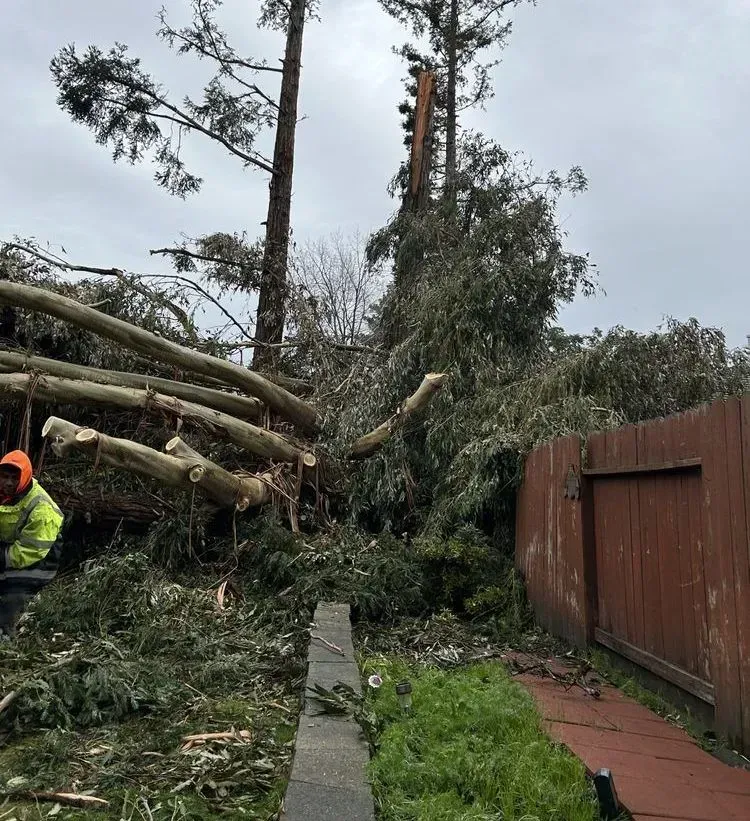
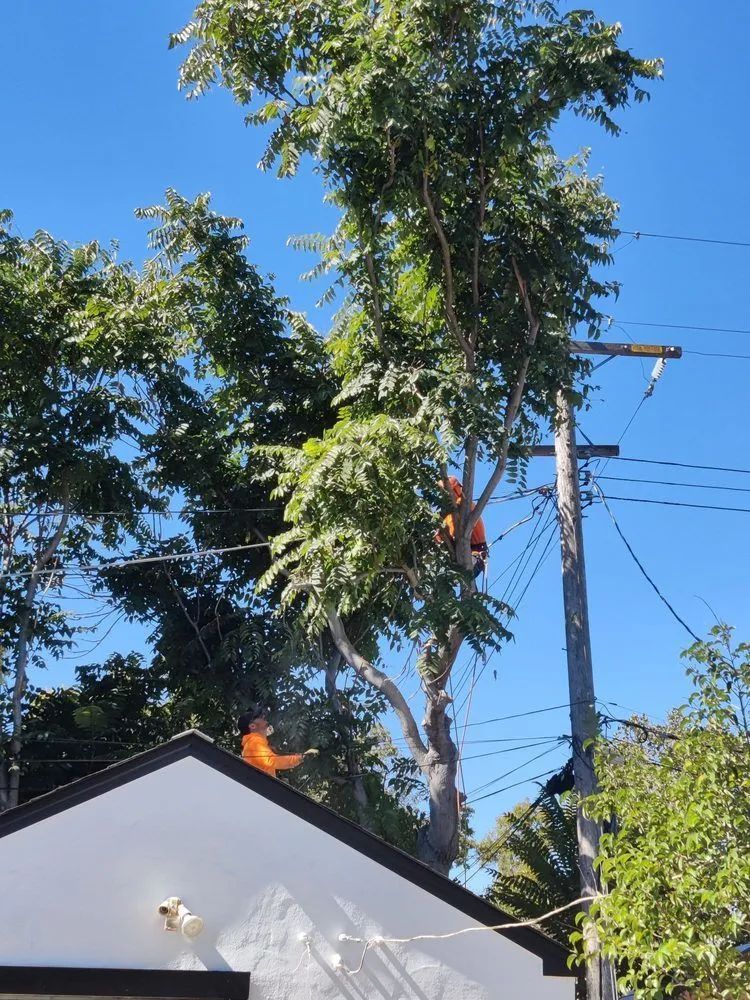
Most residential removals, especially near houses, fences, and lines, are done in pieces. A climber (or a crew using a bucket lift where access allows) works from the top down, removing the tree in manageable sections. Limbs and sections are cut and then lowered to the ground in a controlled way using ropes and rigging, rather than just dropped, so nothing falls where it could cause damage. The tree comes down piece by piece, in a deliberate order, until only the trunk and then the stump remain.
Rigging and controlled lowering
The ropes, pulleys, and lowering systems are what make sectional removal safe near valuable targets. Each piece is secured, cut, and guided down under control, which is how a crew removes a large tree right next to a house without damaging it.
Watching it, the process can look almost routine, because for an experienced crew it is. The drama people imagine, a whole tree crashing down, is exactly what the sectional, rigged approach is designed to avoid.
Tip: Before removal day, do a few simple things to help the crew work efficiently and protect your property: clear vehicles from the driveway and street near the work area, move patio furniture, planters, and anything fragile away from the tree, secure or bring in pets, and let the crew know about anything underground or hidden they should avoid, like a sprinkler system, septic components, or a buried line. A clear, known work area lets the team focus on a safe, smooth takedown.
Stump Handling and What's Left
Once the tree is down, there is the question of the stump, and it is worth knowing your options ahead of time.
Removing the tree itself leaves a stump, and what happens to it depends on what you have arranged. The stump can be ground down below grade with a stump grinder, leaving a fillable hole and a pile of grindings, or in some cases removed more fully. Some homeowners choose to leave the stump for the time being. It is worth deciding in advance whether stump grinding is part of your job, because it is often handled as its own step. Knowing this ahead of time avoids surprises about what remains when the crew leaves.
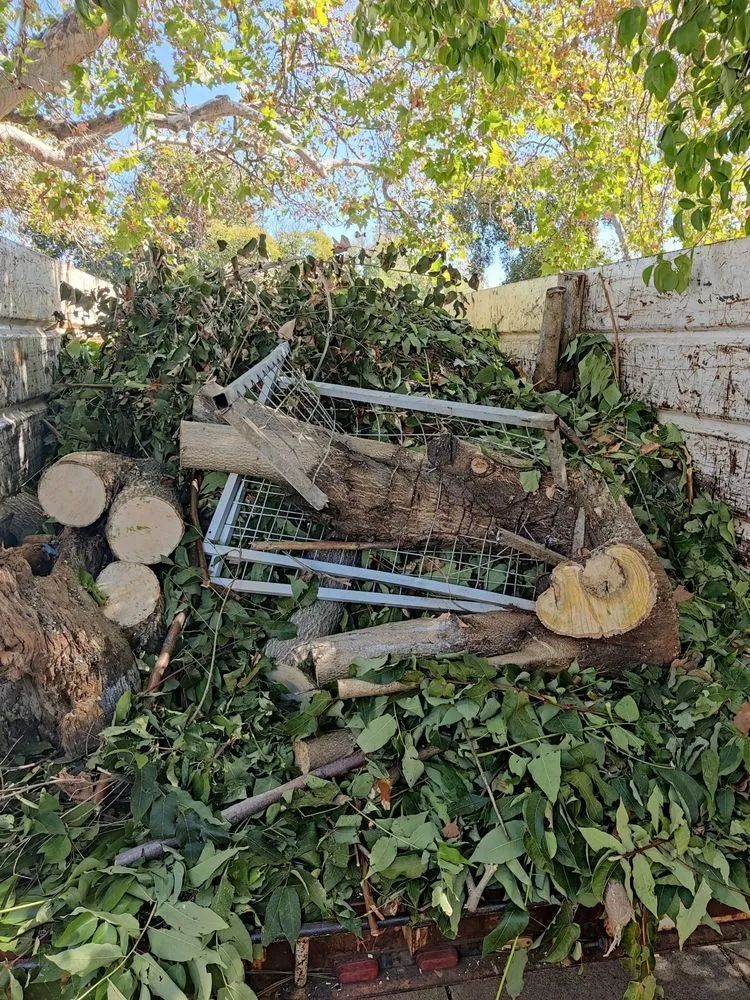
There is also the wood. A removal generates a lot of material, logs, branches, and brush, and the plan should cover what happens to it, whether it is hauled away entirely, chipped, or left cut for firewood if you want it. An eco-minded crew aims to handle the wood responsibly, recycling or repurposing it where possible rather than simply sending it to waste.
Cleanup and a Finished Job
A professional removal does not end when the tree is on the ground; it ends when the site is clean.
After the takedown and any stump work, the crew clears the debris, hauls out the wood and brush, and cleans up the work area, raking and clearing so the yard is left tidy rather than littered with limbs and sawdust. A good crew treats leaving your property clean as part of the job, not an afterthought. By the end, the tree and its mess are gone, and the space is ready for whatever comes next, whether that is a new planting, a project, or simply an opened-up yard.
Most residential tree removals are completed in a single day, though larger or more complex jobs, big trees, tight access, or multiple trees, can take longer. Either way, the day follows the same arc: assess and plan, set up safely, take the tree down in a controlled way, handle the stump and wood, and leave the site clean. Knowing that sequence is what lets you watch removal day with confidence instead of worry.
Frequently Asked Questions
How is a large tree removed without damaging my house?
Near homes, crews remove the tree in sections from the top down rather than felling it whole. Each limb and section is cut and then lowered to the ground under control with ropes and rigging, so nothing falls where it could cause damage. That controlled, piece-by-piece method is exactly how a big tree comes down safely next to a house.
How long does a tree removal take?
Most residential removals are done in a single day. Larger trees, tight or difficult access, or jobs with multiple trees can take longer. The assessment beforehand gives the crew a sense of the time involved, and a good crew will set realistic expectations for your specific job.
Will the crew take the stump too?
Not automatically, stump grinding or removal is often a separate step, so it's worth arranging in advance. The tree removal leaves a stump; if you want it gone, the crew can grind it below grade or remove it. Deciding ahead of time avoids surprises about what's left behind.
What happens to all the wood and branches?
That's covered in the plan. The material can be hauled away, chipped, or left cut for firewood if you'd like it. An eco-minded crew tries to handle the wood responsibly, recycling or repurposing it where possible rather than sending it all to waste.
Do I need to do anything to prepare?
A little prep helps. Clear vehicles from the driveway and nearby street, move patio furniture, planters, and fragile items away from the tree, secure pets, and tell the crew about anything hidden like sprinkler lines or septic components. A clear, known work area lets the team work safely and efficiently.
Is it safe to watch, or to be in the yard during the removal?
The crew sets up a defined, controlled work zone and will ask you and your pets to stay clear of it for safety. You can usually watch from a safe distance outside that zone. Keeping out of the work area is an important part of how the day stays safe for everyone.
Removal Day Without the Worry
A professional tree removal is far more orderly than the crashing, chaotic image people sometimes imagine. It moves through clear stages, a careful assessment and plan, a prepared and protected site, a controlled takedown that brings the tree down in rigged sections near anything valuable, thoughtful handling of the stump and wood, and a thorough cleanup that leaves the yard tidy. Understanding those steps ahead of time is what turns removal day into a predictable, well-run job you can watch with confidence, knowing your property is protected and the tree is coming down exactly as planned.
Know your tree is in capable hands on removal day — A professional removal is a planned, controlled process. We assess the tree, prepare the site, take it down in carefully rigged sections, handle the stump and wood, and leave the site clean instead of creating the chaotic event many people picture. With 15
years of experience, LD Tree Care
provides tree removal services for homeowners throughout Sacramento, California, protecting your home and yard with careful rigging and a thorough, eco-minded cleanup. Reach out for a tree removal assessment and get a clear plan for the job.